Monday, November 19, 2012

diary of a guttersnipe 11/19/2012: when columns collide


by Shawn Starr

"Goin' up the scale and I will prevail
Sharper than the point on the tip of a nail..."

Mini-Reviews

Fantastic Four #1 (Marvel)
by Matt Fraction, Mark Bagley, Mark Farmer, Paul Mounts

Wasn't there a new 'Fantastic Four' like a year ago? Are we reaching a 'Fantastic Four' singularity? Will every 'Fantastic Four' issue soon be a #1? Will the artists keep deteriorating ? How much lower can we get than Bagley? Who? Will the next 'Fantastic Four' #1 be drawn by? a blind autistic elephant with a mangled trunk? THE MAYANS PREDICTED THIS! W E ' R E A L L G O I N G T O E V A P O R A T E I N TTTTT OOO S P A Cccccc E A N DDDDD T III M EEEEEEEE ! ! !

Anyways, this comic is terrible.

Thor: God of Thunder (Marvel)
by Jason Aaron, Esad Ribic, Dean White

Disappointment.

Copra #1 (Self-published)
by Michel Fiffe

Besides being a great toss up to the 'Suicide Squad' with psychedelic overtures not seen since Grant Morrison's 'Doom Patrol' and Peter Milligan's  'Shade, The Changing Man', 'Copra' also features production values that outshine everything else in comics, from the art comics with a print run of four to deluxe edition reprints from major publishers, you'll find nothing that matches the sheer quality as a reading object as 'Copra'. Pick up a $4 Marvel comic and then 'Copra' and try and figure out where the extra money went, the answer will inevitably be Ike Perlmutter's pocket.

Pope Hats #3 (Adhouse)
by Ethan Rilly

It's nice to read a book that you know in three years, when its out as a nice collected edition, will be the de-facto "book that everyone will recommend to their non-comic reading friends" and unlike 'Blankets', it will actually be good.

Cody (Self-published)
by Michael DeForge

'Cody' reads like a DeForge diss track only instead of going after one creator he sets his sights on every person in the medium and shouts out "I made this shit up panel to panel. GET AT ME???" and when you put 'Cody' down, and DeForge drops the artistic mic, you know no one can, because if this is DeForge fucking around then what happens when he's not?*

*The answer is 'Lose' #4 (BLAT! BLAT! MOTHERFUCKER!)

and because I couldn't even be bothered to do this half-assed column by myself, here's a guest review from Mr. Rick Vance ...

Multiple Warheads: Alphabet To Infinity #1 (Image)
by Brandon Graham

This comic feels like 'The Airtight Garage', and I know that isn't enough to talk about but it should be.  It is science fiction of the best kind, not about explanation but about natural cohesion of environment. This is a world that feels like it was both planned and created on the fly at the same time. All of what I have said is what I was expecting, however what I wasn't expecting was the second story that intertwined with the travelogue of the main characters. The bounty hunter swashbuckling story felt right out of Miyazaki's "NausicaƤ of the Valley of the Wind", it had weight but felt airy and kinetic, and full of incredible motion.

There was a single panel in 'King City' of Joe using his Cat almost like a sword which almost previewed what a Brandon Graham fight scene would be like but the full color realization of that promise was amazing. The fact that half of the book is a comedic travelogue and half of it is sword fight it almost shouldn't work, but the secret glue of all of Graham's comics is the puns, they are everywhere so the world feels interconnected even when it otherwise shouldn't. On top of everything else said this thing is 48 pages for 3.99 and transitioning from this to other weekly comics you immediately feel the difference of the page count and the ability he has to lay out his world and design every aspect of this comic to where he wants it.

When I finished reading the comic I had this image in my head
...and that is one of the highest compliments I can give any comic.
----------------
"As soon as you're done making sex? "
-------------
A continuing series of reviews/essays/thoughts on the anthology 'Thickness'


Thickness #2 (Self-published)
by Angie Wang, Michael DeForge, Brandon Graham, Mickey Zachilli, Lisa Hanawalt, True Chubbo, Jillian Tamaki
edited by Ryan Sands, Michael DeForge

Every entry in 'Thickness' #2 would in a lesser anthology be an issue defining story, but here it's difficult to think of anything being a stand out when you look at the contributors involved. That said, still Michael DeForge's 'College Girl By Night' does just that, because even in a master's class someone has to set the curve.

In 'College Girl By Night', DeForge takes the principles of EC Comics (or the lingering perception of what they were) and reinvents them for the modern day, stories of space epics or monster tales give way to DeForge's brilliant take on werewolves as a source of discussing gender identity. The transformation into a werewolf has always been explored as an aspect of the beast within man, but DeForge inverts this idea into the woman inside man which in turn allows a whole new dimension of the story to be explored. DeForge goes even further though, adding allusions to internet culture, social media, and commenting on the indecisiveness of college and planning for the future (does he want to date someone in his female form? Start a life with them? What will he/she look like in twenty years?)

'College Girls By Night' is just eight pages, but the ambition of the story puts it alongside any of the great "OGN's" in both emotional weight and thematic resonance, in less pages than many take to say a character's name.

Angie Wang's 'Untitled' is a beautiful entry, in any anthology, but what separates it from the rest of the book is it's use of action comic techniques to represent sexuality. It is impossible to look at Wang's use of the panel grid and not be reminded of a Kirby-esque action sequence, each action and movement becomes larger and more kinetic as the panel grid is stripped away (a sixteen panel grid gives way to a nine, which gives way to a four, etc.), at all times building towards a single page climax.

What Wang does though, to distinguish her story from the overcrowded field of action comics, is instead of using this technique to tell the story of two men clobbering each others brains out, she tells a small and intimate story of two women making love. It is awkward and fumbled at first, restricted by the claustrophobic sixteen panel grid, but as each character becomes more familiar with each other the pages open up and their actions become more free and natural.

In tandem with these sequences, Wang uses her dialogue to further connect with these classic fight scenes, as the action escalates each character's dialogue devolve from articulate sentences into short single word bursts and finally into abstract symbolism.

Brandon Graham's 'Dirty Deeds' may be the height of Graham's punnery, but if there was a time and place for it, 'Thickness' is it. Porn has always been the cornerstone of pun titles (with the exception of the recent crop of (Insert Superhero): A Porn Parody which are really a wasted opportunity).

In 'Dirty Deeds', Graham goes all out with his puns turning every aspect of the page into an elaborate joke, from background gags, like a robots decals reading "Sex Million Dollar Mech" to making the page layout itself sexual innuendo. Graham's previously published works of pornography ('Perverts of the Unknown', 'Multiple Warheads', and 'Pillow Fight') were always constrained because of their explicit need to be pornography first and foremost, but 'Thickness' (while being a collection of pornography) does not have the same editorial goal in mind allowing Graham to condense every pun that you would see in 'Perverts of the Unknown' into a single page of 'Diry Deeds'.

"I lost my wedding band in the pond!"
"I guess that means you're not married anymore..."
"I guess so..."

This is how Mickey Z opens her story of a temptation, a murky narrative that seems to just flow from page to page, always going somewhere, but never being forced or contorted to reach that end. 'Slime Worm' is simply that, it slimes and it worms its way to an end, illustrated in a watery, almost intangible style pushing the boundaries of what actually constitutes a grid.
----------------
A odd moment of shared contempt broke out when i told Alec Berry, Joey (HARD TO SPELL ITALIAN LAST NAME), and Chad Nevett over Skype that i had no clue who or what a Steve Rude was. It's weird what people hold sacred.

'The Drifting Classroom' seems to have no qualms with violently disemboweling or setting aflame small children at every opportunity. No rain? Lets crucify this kid. Might have the Plague? Burn him alive. Being a plain old dick? Nothing a rock to the face wont solve.

I was very pleased when the guy behind me in line for beer informed everyone in shouting distance that he was fine with waiting since he had just done a bunch of pills.

Even though i have no childhood connection to Carl Bark's 'Donald Duck' comics, picking up the second volume of Fantagraphics' reprints just causes this immediate resonance. Maybe his artwork is just so built into the public iconography that everyone is exposed to it during childhood without knowing it.

Fun Fact: The total population of West Virgina is less than the city of Boston.

I guess Marvel is reducing the number of "Premiere" Hardcovers they produce, which is good news. The only thing Marvel's "Premiere" collections are the premiere of is shitty over priced money grabs.

As others have pointed out, the finals chapter of 'Marvel Comics: The Untold Story' just kind of peters out. Howe skims the major events (which is essentially the Marvel Studios films) and calls it a day. I assume the problem is anyone who could provide him with inter-office gossip is still gainfully employed by Marvel and would wish to keep their job (which makes sense), but results in a weak ending to a great book.

Letting all those mediocre nu-52 books have a couple issues to find there footing before dropping the entire line has left me giving every one of those Marvel NOW! launch titles absolutely no leeway.

The Emma Frost in 'All-New X-Men' is a clone right? Because I'm 99% certain that she was still in jail last time i saw her.
--------------
"I'm gonna go across the street and, uh, schling a schlong."

Monday, November 12, 2012

diary of a guttersnipe 11/12/2012: dead people are infinities of maybes


by Shawn Starr

I attended the Brooklyn Comics & Graphics Festival this past weekend, i don't have any pictures because i hate taking pictures (along with having pictures of me taken). I was the sole Chemical Box member in attendance because Sandy is a bitch who hates fun. Also the electrical companies in New York are terrible at their jobs (Hurricane Sandy is also the reason there was no column last week).

Mini-Reviews


The End of the Fucking World #12 (Oily)
by Charles Forsman

Every issue fills me with this sense of dread, even when nothing happens. I'm just waiting for the hammer to drop, even when the only thing that's happening is an awkward conversation between a daughter and her estranged father.

Ripper & Friends #1 (Traditional)
by Benjamin Marra

Following the Fantagraphics reprints of EC Comics, the once hallowed line has had it's reputation tarnished a bit (most notably by Chris Mautner, along with the earlier and recently reprinted, Ng Suat Tong essay 'EC Comics and the Chimera of Memory'). Pushing the well founded idea that the EC line is not so much a collection of masterpieces, but instead a line which produced mediocre to pretty good comics with top tier talent that had touches of brilliance.

With 'Ripper & Friends', Ben Marra begins his own similar critique of a much beloved classic comics work. That being one of Robert Crumb's seminal works 'Fritz the Cat' (a title also recently collected by Fantagraphics), a work which has been long seen as a biting satire of 60's culture.

Taking Crumbs "classic" comic turned movie one step lower on the intellectual totem pole, Marra casts 'Ripper & Friends' as a Saturday morning cartoon about a gang of dogs running away from the evil dog catcher and a mean landlord (which i am sure are all vicious critiques on "Fascism" and "Capitalism" or something). By taking Fritz from the respectability of print (and its semi-important place in film) and turning it into a children's show, Marra is able to strip away the vague intellectualism that Fritz spat out (always of course, in the midst of trying to have sex with a Crumb inspired woman) and was thought to represent. This in turn places the importance back on what the majority of the book was about, which was an anthropomorphic cat trying to fuck some stupid college girls. In Marra's version of this story we are treated to a drugged out dog and his gang trying to get revenge on some meth head college dropouts to in turn live another day to shit on another lawn.

By taking away much of the pretense of Crumb's 'Fritz the Cat' and leaving it as a bare bones work of obscenity laden gags, Marra (like Johnny Ryan) moves closer to the core of Crumb's work on Fritz, while also moving further away from the general consensus of the work.

Masters of the Universe: The Origin of Skeletor #1 (DC)
by Joshua Hale Fialkov, Frazer Irving

If you ever wondered if Frazer Irving could get me to buy a He-Man tie-in comic, the answer is yes.

Eat More Bikes (Koyama Press)
by Nathan Blumer

This is a very funny comic.

----------------------------------


"I pray my dick get big as the Eiffel Tower, So I can fuck the world for 72 hours "

----------------------------------

A continuing series of reviews/essays/thoughts on the anthology 'Thickness'

Thickness #1 (Self-published)
by Katie Skelly, Jonny Negron, Ze Jian Shen, Derek Ballard, True Chubbo
edited by Ryan Sands, Michael DeForge

The first issue of 'Thickness' is bare bones compared to later issues, featuring four short stories along with a reoccurring strip by True Chubbo. Drifting from the every day to the exotic, 'Thickness' #1 escapes any attempts at categorization in it's first issue, a trait the series maintains throughout it's (so far) 3 issue run. While many anthologies try to craft a through line with each issue (or simply stick within a set genre), 'Thickness' takes pleasure in its evasiveness and moves seamlessly between humor, action, horror and the abstract. Just like there are a million different fetishes, there are a million different stories to be told within the pages of 'Thickness', and the editors Ryan Sands and Michael DeForge choose not to limit their contributors with silly confinements.

The standout of 'Thickness' #1 is without a doubt Johnny Negron's 'Grandaddy Purple, Erotic Gameshow', this was my first exposure to Negron's work and its easy to understand why he rose so quickly in prominence. The story centers around a masked man breaking into a club/brothel and being given a prize for his successful infiltration, all he must do is choose a door.

What makes this story stand out is Negron's ability to move effortlessly between genres and tones, beginning with an action movie break-in (depicted as dynamic as anything Otomo ever drew) transforming into a absurd late night game show and ending in one of the most graphic sex scenes featured in 'Thickness', and at no point does any of these tonal jumps feel like anything but an organic extension of the narrative.

Negron's use of panels to manipulate mood and pacing are also worth mentioning. Opening with a cinematic three panel grid Negron begins to litter his page's with tiny groupings of panels which take on an animation like quality. The "regular" panels are still used for the major story beats, but these small batches of panels force the reader to slow down and linger on the moment they're depicting to a much greater degree than they would if given a full panel, creating an expansionist quality to them. It's a pacing technique that turns this almost completely silent comic into one of the densest and interesting in the series.

Katie Skelly's 'Breeding Season' along with Ze Jian Shen's 'Pearl Divers' offer a nice counterbalance to Negron's tale, taking on a more comedic and wistful tone. The most striking detail of Shen's entry is the use of an abrasive neon red as it's only form of color, that has a jolting effect after Negron's deep purples, acting almost like a light switch being flipped on after you've become accustomed to the dark.


---------------------


words

Bergen St Comics makes every other comic shop I've been to look like shit in comparison. Utter shit.

Michel Fiffe is doing a monthly comic called 'COPRA', and i think its safe to say, just on a quick flip through, that it will be the best looking monthly comic coming out.

Additionally Michel Fiffe's piece on meeting Steve Ditko was an amazing read.

I really liked this single thought "Random Thoughts" column.

I finished reading Bret Easton Ellis' 'American Psycho' on the car ride to BCGF, and my major takeaway was that, as a work of satire, Ells may have pushed the violence too far both in its frequency and elaborateness. At times it felt like Ellis fetishized the killings more than Bateman ever could.

Josh Simmons is unsettlingly normal.

If 'Wayward Girls' has ever cleared customs, i would be shocked.

BCGF was hot as a donkey's ass (even though it was 50 degrees out) and filled beyond capacity, proving that even art-comic conventions have to obey the fundamental rule of comic conventions: everyone in attendance needs to be as uncomfortable and close together as possible.

Ben Marra is easily the chillest dude i have ever meet.

This is one of the better episodes of Comic Books Are Burning in Hell.

Started reading 'Marvel Comics: The Untold Story', my favorite part so far is Stan Lee defending Marvel as being multicultural by replying to an article and listing all the black characters at Marvel, including The-Man-Ape. Yep. The-Man-Ape. Not racist at all. (He also says Negro a couple times)

Watching Charles Bronson get fatter and older in each successive "Death Wish" sequel is sad to watch.

Sunday, November 11, 2012

direct message 003.5: kingdom come/marvels

by Alec Berry and Chad Nevett

Heads up: Chad and I started writing this back in August, and we never completed it. It was to mark the next installment of our conversation series Direct Message, but due to delays, a hiatus and a dislike for what was written (mainly, on my part), we decided to never finish it. We're planning to get back to DM soon, though, so we've chosen to just release what we did complete of our Kingdom Come/Marvels discussion. Be warned, I'm not exactly thrilled with what's written here. Chad's well-spoken, but I relied too much on anger and less on logic to make my argument of Alex Ross's incompetence. I mean what I wrote here, but it's bad criticism.

Anyway, read it for whatever value there may be and stay tuned. Chad and I will soon write about The Manhattan Projects by Jonathan Hickman and Nick Pitarra right here on this blog.


Alec Berry: At this point, Alex Ross cannot be considered anything more than another guy with an obsession to chase, and even though most art rides high on the energies of obsession, Ross’s own seem to rather contradict the subjects he chooses to illustrate. Through his particular style and attitude, Ross feeds on the thought of legitimization more than any other comics creator I can name, and it’s his quest to somehow excuse and justify his profession to that multitude of outside, teeming masses that puts him over the top, way above any example of an autobiographical graphic novel you can present. Because even then, those OGNs still tend to stray from the lockjaw poses.  

We all know his particular visual style: the wrinkles in the spandex, the paint, the rendered figures, and yes, the statue-esque, wannabee-iconic stances he forces upon any human-like figure he lays a pencil to. Those images, without really any of our consent, still drift about our recollections, reminding us of those years when we all tried just a tad too hard to stand up and shout, “hey, comic books aren’t for kids anymore!”, even when Watchmen and The Dark Knight Returns apparently already placed the medium in the running, swaying popular opinion just somewhat. Ross still wanted to walk those few extra steps, though, just to make sure he completely clean cut the head off that corpse of a horse. Little did we know he’d also penetrate a certain hole. A corpse-y, dead, horse hole.  

No two books exemplify this more than Marvels by Kurt Busiek and Ross and Kingdom Come by Mark Waid and Ross. Whether or not he’d like the works compared, slammed together like siamese twins, you can’t entirely separate them. Sure, you can try. To a degree, each work stands independent due to its own designed narrative, but to see the greater picture - Ross’s ultimate debate - the books must share the same room, because thematically, Marvels and Kingdom Come work together to deliver Ross’s thesis: that the past, or traditional practices, trump all modern concerns. At least, that is, with super heroes, yet where else could a debate of regression versus progression fit so right at home?

It’s this thesis, paired with Ross’s photo realism obsession, that ultimately creates this overall contradiction. How can you celebrate tradition when your presentation is so much about dissing it? But goddamn it, he tries. He fucking tries, creating this grand Ross-ian attitude that I can only sum up as: a self-absorbed, pretentious for no reason, fan. And through his trial to prove his profession worthy of those moms and grandpas out there who are so “interested” in what he has to do, Ross undermines what makes a comic book function, just so those panels might hang on a wall somewhere.    

I’m not exactly sure whether I’m getting it across to you or not, but I really do not like Alex Ross, yet apparently that might be the minority opinion? I can’t exactly speak for the accepted understanding present at the moment, but it’s always been made clear that initially, even up until such books as Justice or the Justice Society of America arc, Thy Kingdom Come, Alex Ross was a commodity and public favorite. I never really got it.

Well, I mean, I get it, but …

The first time I ever read Kingdom Come it was handed to me by a high school creative writing teacher. My teacher. Between the fits and spots of random discourse, he made a point to sum up his enjoyment of the book in one statement, “Ross placed so much weight on the stuff I already loved.” A fine statement. Most likely a heartfelt one, but it’s a statement that seems to speak for the general fan reaction.

Ross “legitimized” everybody’s childhood by presenting it in an “artful” fashion - or what is most easily perceived to be art by the ill-informed: paint. Paint, canvas … those represent art for most people just because of its long standing connection to the principle as well as the fact most great artists, or the famous ones, worked within that particular medium. Ross, no matter his skill, picked up on that and managed to easily establish his importance.  

Past the aesthetic lies a suffering set of gears, though. The components become expendable rather than essential, and this becomes ironic as you realize the Image-style Ross was so desperate to escape really just defined the work he did. He’s the other half of the Rob Liefeld coin: same issue with mechanics, yet different in terms of spirit . Where Liefeld embodies self-awareness, Ross lives and breaths the self-pride, selling his art for big money and proclaiming his touch on the super hero to be everlasting.

Too bad Marvels isn’t anything more than Galactus taken seriously - seriously, seriously, not “these Kirby comics offer more than the monthly adventure.” - and Kingdom Come wasn’t the next Watchmen he wanted it to be.

I just love that Magog is Ross’s “fuck you” to Liefeld because he doesn’t even earn it whatsoever and just comes off like a complete fucking dick.

But, beside personal attacks, we could criticize the actual books, and Chad, that’s where I think you should pick up. As you can see, I’m caught up somewhere else.

Chad Nevett: Jesus, dude... I was not expecting that. What do you need me for again?

I guess I’ll just launch into my history with Alex Ross, particularly these two comics. I think I came across Ross first in Wizard with that issue where where he did two three-page covers. One of the Silver Age heroes of the Marvel Universe, one of the villains. Or maybe it was in Marvel Age where that little Human Torch Marvels prequel first ran? I don’t know. I liked what I saw, because painted superhero comics were cool, I guess. His art looked good, especially outside of the constraints of serialised sequential storytelling. He made heroes and villains alike look both ‘real’ and more than human. Say what you will, but that’s a tough trick to pull off.

I read Kingdom Come when it was coming out, because my dad bought it (and later gave me the trade paperback for my birthday one year). That appealed to me in a different way that probably intended. I love alternate realities/futures stories. Seeing the heroes I know in some weird future where they’re older and wear different costumes, and there are all these new kids? Awesome. You know, in that superficial spectacle sort of way. I can just flip through that book still and linger over the way those characters look, how their costumes are different. I love that stuff.

And I liked Kingdom Come. Even then, I didn’t agree with it entirely. After all, I am a child of the time period that Waid and Ross are tearing down. There’s an irony in tearing down the age that tore down the heroes, I guess, but it didn’t sit well with me entirely. I focused more on the ‘alternate future’ angle and tried to ignore the message.

I didn’t read Marvels until later, taking it out from the library, and was somewhat unimpressed. It’s a fun book in that ‘spot the reference’ sort of way and a trip through the Marvel Universe from the perspective of a regular guy is interesting. I was flipping through it in preparation for this conversation (I’m still undecided if I’ll reread both works since I’ve read them many, many times already) and kept drifting towards the moments where you see how ugly the Marvel Universe is. I love the way that the third issue ends, Phil just tearing into people because they can’t appreciate the fact that the world was just saved.

The idea of ‘legitimising’ comics never actually occurred to me with regards to Ross. It’s not something I ever think about, honestly. It’s the one obsession that the comics industry has that I don’t share. I’ve always said that that’s probably because comics were always ‘there’ for me. They weren’t any different than TV or movies or books. They were in the house, same as the rest. I did school projects about them and it was never suggested that that was wrong somehow. I never thought about it... But, I think you’re onto something there and it’s something I never considered about Ross.

In flipping through both books, what’s hard to miss is how bitter they seem. How they seem to be about how great comics were and how great these heroes are... all while showing us again and again how terrible an effect they all have on the world merely by existing. If anything, Marvels and Kingdom Come seem like comics that hate superheroes and want to show us again and again how terrible they are. That doesn’t sound like Busiek and Waid, though. Yet, those threads are there...

My favourite Alex Ross story: I was once banned from Millarworld for a day or two by saying that he ‘sucks Silver Age cock.’ Somewhat embarrassing now that I’m ten years older, but not a sentiment that’s wrong in any way that I can see.

AB: Yeah. Shawn Starr based an entire post on what he claims is your “eternal question.” I still laugh about that, because while crude, you’re not wrong.

While my claim comes from some of what I see in terms of fan reaction, Marvels and Kingdom Come do provide more concrete evidence, supporting my theory that Ross worked to make super hero comics more acceptable on a greater cultural stage.  

And I should clarify because while Busiek and Waid certainly have their own attachments to the projects, Ross dominates these works. For one, it’s a visual medium, and a style like his submits these stories into a strangle hold of epic proportions, and beyond that, Ross was involved in the production much more than your typical comics artist. Kingdom Come especially, with its forty page treatment written by Ross and the fact that Mark Waid was brought in to flesh out the story. It’s a Ross project. Marvels features more of a collaboration, but Busiek even notes the story featured the events it did all because Ross wanted to draw them.

And you can’t undermine the thematic link both works share as well as the fact the only way to establish said link is by a common creative influence, Ross.  

Plus, both Marvels and Kingdom Come share in the same conversation. You mention these comics present a hateful attitude toward the genre, but I wouldn’t say it’s the whole genre Ross dislikes. I think it’s just the silliness, or at least, the Image-era super hero. Both books were published in the Image aftermath, and especially when you consider the younger characters in Kingdom Come who fight to fight, it’s hard to ignore. Ross wanted his heroes to mean something more than flashy bombast.

Which, I must say, is a noble goal, and while I enjoy bombast to a large degree, I can respect the guy’s concern  for or desire to read a story with a little more going on. I just find it odd Ross had to regress the super hero in order to push the type forward, you know what I mean? His visual style as well as the goals of both Marvels and Kingdom Come scream for this progression toward seeing super hero comics more like literature than pulp magazines, yet his characterizations and his classic portrayals are nostalgic, through and through, and they argue for the original concepts by keeping things neat rather than taking the messy leap like Miller does with The Dark Knight Strikes Again.  I feel he completely subverts, unintentionally, everything he works toward by, as you say, “sucking Silver Age cock,” and it would be why I left both of these works cold.

To discuss them a little more specifically, Marvels would be the worst of the two. Where Kingdom Come offers more room to interpret, Marvels completely puts it down your throat that what you may have grown up reading as a kid wasn’t entirely trash. And while Busiek and Ross are correct, it wasn’t - those early Marvel comic books are significant for more than historical points - the book sets its argument up in a fashion of connecting great social issues to Marvel continuity. And, again, while it’s not wrong or off, I just find the approach, overall, to be a little too self-righteous. Phil Sheldon becomes that hardcore Marvel fan who all along poked you with an “I told you so,” and by the end he’s so sucked into it all he can’t even offer a comment without being biased.

As you said up top, there is a sense of wonder to Marvels because at first it is certainly interesting to look at and see these iconic super hero moments rendered in such fine detail, but past the catch I’m not sure what it all offers. I do enjoy the concept of super heroes from man’s perspective because it can be interesting, and I even think Busiek wins me over for moments - like the ending of issue three mentioned by you or even the series overall ending with Danny Ketch showing up. The idea just loses its merit when its made into an actual story and there’s a plot surrounding it. Also, Marvels stunts itself by finding ways to leap from Marvel event to Marvel event. The book becomes a slave to continuity in order to complete its mission and many of the plot mechanics fall transparent because that mission is made so clear even before you begin reading.

CN: The idea that Ross is fighting against ‘silliness’ makes me want to know how you define ‘silliness’ since so many of the comics that Ross seems to celebrate are pretty fucking silly. And that’s not a bad thing as far as I’m concerned, just that it’s a pretty wide open term. After all, when people think of the Silver Age these days, ‘silly’ is a word that pops up fairly quickly.

I get what Ross is railing against, but I’m not always sure what he’s fighting for. You say it’s that the comics he grew up on aren’t just some disposable trash for kids and that sounds right. I just don’t see that. Partly because the vision of those characters and stories that Ross presents is so unlike what they were. If that is the vision of those comics that he has and that vision is disconnected from what they were, then what is he actually championing?

In that respect, I agree, Marvels is the worst of the two. It presents a vision of the Marvel Universe that doesn’t actually seem like the Marvel Universe. It’s an alternate reality of that old Marvel Saga comic that tried to connect everything up filtered through his painted, earnest style and that sucks out the fun and pop energy of those comics, boils them down to straight high tension live or death situations. Ross’s comics aren’t fun. They aren’t silly, as you put it... and those comics were, to a degree. I look at issue three and the arrival of Galactus and it plays out like a superhero Cloverfield where, by grounding these events in ‘real’ humans, something is lost. There isn’t wonder, there’s just terror. Living in the Marvel Universe New York would be so goddamn frightening that, in Marvels, it’s hard to believe that anyone would continue living there. It’s just disaster after disaster after disaster for the entire run of that series.

I remember an issue of Wizard where they tried to answer a variety of comics questions and had quotes from creators. One was something like “Was Gwen Stacey killed by a broken neck or by the fall?” and I remember Ross being quoted about the ‘snap’ being pretty definitive that it was a broken neck that killed Gwen (I believe they showed his recreation of that moment from Marvels). Even then, my instant reaction was “What, dead people can’t have their necks broken? She could have been dead already! A sound effect proves nothing!” And if that doesn’t illustrate the difference between he and I, I don’t know what will...

AB: “Silly” or “silliness” just stand as my cheap ways of saying bombastic, exuberant or animated. Ross’s style and voice go against those adjectives: Adjectives that certainly belong to super hero comics. In much a way, his work is a disagreeing response to those qualities, even when he’s also riffing so much on those books to make the comics he does. But that’s kind of my point: Alex Ross is a walking contradiction, and it’s all visually summarized by all the stern figures wearing colorful outfits he paints. It’s not even clear whether or not he’s really celebrating super hero books of that period. He appears more interested in rewriting those early comics instead of honoring them. If anything, he’s championing himself. That’s the tone of Ross’s work: a strong helping of self-righteous flattery.

CN: So? I don’t know how, but you just flipped a switch and, suddenly, I’m defending Ross. So what if it’s self-righteous flattery? Is that so bad? Hell, many of my favourite writers seem unable to escape that concept in one way or another. There’s something I like about the idea of someone taking what is and reworking it to fit their worldview. Now, that I find Ross’s work off-putting much of the time negates that idea when it comes to him to some degree, but my point still stands. If we were talking about Morrison or Ellis or *insert your favourite writer here* doing the same thing, would the tone be one of praise or condemnation?

Of course, part of the problem with Ross is that that’s not what he says he’s doing. He claims to be ‘honouring’ the comics and creators that came before him and that’s clearly not how either of us view his work. Maybe that’s the problem. I tend not to get too swept up in the intention of the author, because it doesn’t matter one bit to my experience. Or, it shouldn’t, but usually winds up having some effect. With Ross, it’s hard to separate the intent from the work and not notice the large disconnect between the two. After all, do you read Marvels and Kingdom Come and feel like something is being honoured? I sure don’t...

You be the judge.

Monday, October 29, 2012

diary of a guttersnipe 10/29/12: earth a.d. ("after disaster")


by Shawn Starr

It's a short one this week because i spent three days in Maine being a lush, so Happy Halloween and try not to die in that hurricane.

Mini-Reviews

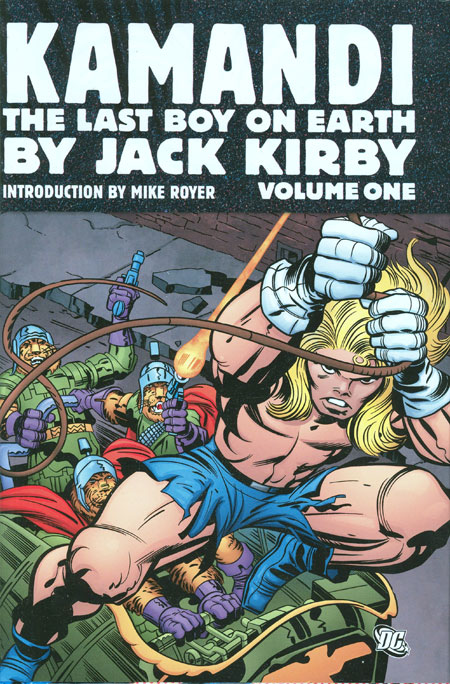
Kamandi: The Last Boy On Earth, Volume One (DC)
by Jack Kirby, D. Bruce Berry, Mike Royer

If someone asked me to name the perfect action adventure comic, i could think of no better example than Jack Kirby's 'Kamandi: The Last Boy On Earth'. Every single issue of this book, fuck that, every single PAGE of this book is exploding with the best choreographed action ever drawn, and idea's so purely Kirby that they defy explanation. Giving a plot summary of any of these issues is nearly impossible, because it loses something in translation. They're Kirby, that is all.

I think a lot of the "age of awesome" of the mid 2000's and the recent crop of high concept books try to ape whats going on in this book, but all they do is throw all these ideas at you that are primarily just references to other things (i.e. The 'Family Guy' method of comedy) and trusts the reader to identify them as cool (because hey i saw that movie once). 'Kamandi' on the other hand just sweats awesome, it doesn't need to reference anything because Kirby can just create something twenty times better than whatever movie you were thinking of. 'Kamandi' itself even started life as a "Planet of the Apes" rip off and then Kirby turned it into an entire world with so many possible stories and alternate histories that he could have stayed there forever and still had material to mine, something the latter "Planet of the Apes" films failed to do.

In conclusion, Fuck every other comic, i got 'Kamandi'.

Batman Incorporated #4 (DC)
by Grant Morrison, Chris Burnham, Nathan Fairbairn

I thought we all knew who Wingman was the second he was introduced?

Wolverine MAX #1 (Marvel)
by Jason Starr, Roland Boschi, Connur Willumsen, Dan Brown

I can't think of a book that's had such a dramatic shift in the general level of skill between artists as they trade off pages, Roland Boschi is a competent "mainstream" artist that doesn't do anything past exist and fill pages; while Connor Willumsen has this amazing Crumb mixed with Miller (circa 'Ronin') kind of style (along with a dozen other influences) that just blows Boschi off the page in every conceivable way. Which makes their pairing all the stranger, they don't complement each other in the slightest, one just highlights how terrible the other one is.

It also now seems Willumsen is off the book, which saves me from needing to worry about its existence anymore. Good game Marvel!

Godzilla: The Half-Century War #3 (IDW)
by James Stokoe

Stokoe-Monster-Battle-Royale.

FF #23 (Marvel)
by Jonathan Hickman, Nick Dragotta, Cris Peter

The point of this issue (and what Hickman supposedly sees his run as ultimately saying) is that "Intelligence without imagination is pretty much useless, Creating is harder than knowing". He then goes on to "imagine" the completely original idea of Cowboys vs Dinosaurs vs Jello Knights.

I liked this issue (and Hickman's tenure on 'Fantastic Four' in general) but it doesn't work as an epilogue to the run it tries to encapsulate because Hickman's imagination ran out after the first arc. After the first arc was where Hickman began to focus on his hyper detailed mega-plot full of "awesome" moments and issues packed with exposition, and didn't show up again until 'FF' launched, and even that relied way to heavily on having all the exposition spelled out in 'Fantastic Four' and letting 'FF' exist as a side book (while occasionally still putting in fill-in exposition left out of the main book). Maybe having (old) Franklin push his younger self to have more fun is Hickman admitting he lost the thread a bit and perhaps urging Fraction to up his game a little bit for his upcoming run on the franchise.

==============MISS, GET OUT OF THE CAR ===============

Shifty Nifty

A bunch of "legendary" runs ended this week, and I am not sure what that means besides that they were long and generally well received. None of them changed comics, and they wont have any real lasting effect outside of being put on some publishers' "MUST READ" PR list whenever the next movie involving those characters comes out. Sure Fraction's 'Invincible Iron Man' is probably the best modern Iron Man run out there, but that doesn't make it "legendary", does it? Being the best run of something doesn't make your run "legendary", it makes it exist. If i wrote the "best" 'Witchblade' comic, does that mean i had a legendary run ? or does it mean that the level of competency on that book was so low that anything above shit was heralded as the next 'Watchmen'.? The better question is does it stand up to Jack Kirby's 'Fantastic Four', Frank Miller's 'Daredevil', Alan Moore's 'Swamp Thing' ? I don't think so. The only one which would possibly meet that criteria is maybe Brubaker's 'Captain America', but i couldn't read that comic past the first Omnibus because Frank D'armata is a terrible colorist. I mean he's like the worst colorist to ever color anything ever. It's the same reason i couldn't read Fraction's 'Invincible Iron Man' for any extended period of time because Frank D'armata colors everything in this vague shade of shit that makes me want to burn anything his over rendered hand touches. Maybe that was their lasting effect, teaching me that the colorists do matter.

That "Evil Dead" remake trailer looks atrocious, in the sense that it seems to be remaking "The Evil Dead" into a bland retread of every other horror movie from the past decade and dropping everything that made anyone care about the film in the first place by the wayside. Which brings the question of why remake a film that is so purely an expression of a single director and actor ? Especially when said film has very limited wide spread recognition (most people have a vague recollection of who Freddy Kruger and Jason are, no one knows who Ash is honestly), especially when you remake it into a broad base horror film that could have been named anything else and reached the same target audience (a.k.a. teenagers trying to feel up there girlfriends on a Friday night). (Editor's Note: while i totally agree with your take on the new trailer, can we at least agree that the star Jane Levy is really fucking gorgeous - Joey)

This was a interesting discussion on Ware's 'Building Stories'.

"Argo" was a solid film.

I watched "Demolition Man" recently and that film still holds up surprisingly well visually (Joey pointed out this as well with the 1995 "Judge Dredd" film recently on a Chemical Box episode), the production quality really sells the future setting. In this film the "underground society" looks like an "underground society" and the "Utopian" world looks "Utopian". They also do a great job of layering in both a "vague" history (the franchise wars, Schwarzenegger as president) along with new and interesting technology (what are the shells for?) to make it into an actual film.

"OMAC lives.... so that man may live !"

New Dash Shaw! Good,  i was starting to wonder where that guy went (besides animation).

A new Ben Marra comic came out, i somehow didn't hear anything about this until after it was released. I guess I'm slacking.

I liked this review of EC Comics by Chris Mautner.

Marvel solicited a trade collecting various female X-Men stories and anchored it with the Milo Manara / Chris Claremont 'X-Women' one-shot, because Marvel doesn't understand woman.

----Random Gulacy Kung-Fu to finish us out----