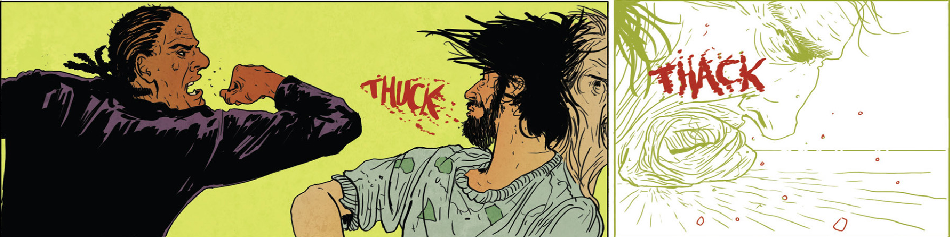
in this week's episode we have a change of pace with an interview with cartoonist charles forsman (teotfw, celebrated summer) conducted by joey and our resident curmudgeon/columnist shawn starr (you get to finally hear his voice!). topics discussed include the origins of his publishing outfit oily comics, what he learned at ccs, the influence of chester brown, and why this is one of the best movies ever, and much more.
music by speedy ortiz
download
Showing posts with label interviews. Show all posts
Monday, March 31, 2014
Monday, August 19, 2013
diary of a guttersnipe 08/20/2013: 48/48/48 times 50
by Shawn Starr
To get things started this week, I thought i would point out that the creators of this fine website Joey Aulisio (a.k.a. my editor) and some dude named Alec Berry did a new episode of the chemical box (the podcast for which this site is so applicably named after). It’s more an elongated talk about why they have been absent than a new episode proper, but i really enjoyed it.
Anyways, here's some words....
Mini-Reviews
Teen Creeps #1 (Oily)
by Charles Forsman
I like that within the first two pages, 'Teen Creeps' delivers on the titles promise. The page featuring “You taste like cherries...do you eat a lot of cherries” makes my fucking skin crawl. What the fuck is wrong with teenagers.
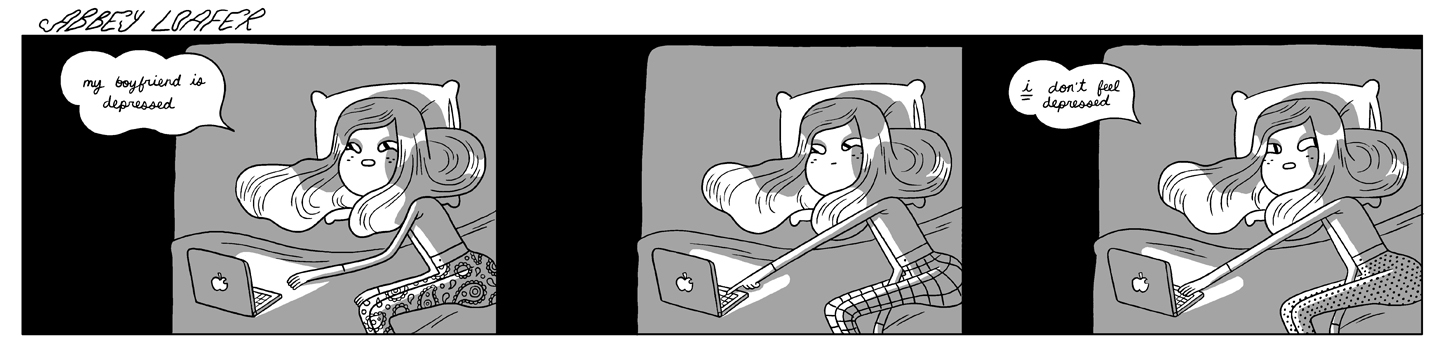
Michael DeForge has completed his 'Abby Loafer' strip for Mother News. You can read it all here. It’s the story of a fashion columnist and her day to day life. The twist though is that it’s by Michael DeForge which makes it intrinsically better than anything else being published right now.
Ryan Sands and 'Thickness' are spotlighted in The Pop Manifesto. Also, I read this interview between Ryan Sands and Frederik Schodt which originally appeared in 'Electric Ant' #1 that i really enjoyed. For context, Schodt was one of the key players in bringing Manga (and Tezuka in particular) to America.
Simon Hanselmann is selling 'Truth Zone' originals (installments 1-69). You can browse them here.
New issue of Derek Ballard’s 'Cartoonshow'. This issue being #2.
Patrick Kyle’s Batman fan comic 'You Can Never Be Me' is online. I think this debuted at BCGF last year and is now out of print, so unless you own it this is probably the only chance you’ll have of reading it.
A new Kyle Baker strip emerged. Besides whatever Michael DeForge is doing, this is probably the best thing being published.
To get things started this week, I thought i would point out that the creators of this fine website Joey Aulisio (a.k.a. my editor) and some dude named Alec Berry did a new episode of the chemical box (the podcast for which this site is so applicably named after). It’s more an elongated talk about why they have been absent than a new episode proper, but i really enjoyed it.
Anyways, here's some words....
Mini-Reviews
Teen Creeps #1 (Oily)
by Charles Forsman
I like that within the first two pages, 'Teen Creeps' delivers on the titles promise. The page featuring “You taste like cherries...do you eat a lot of cherries” makes my fucking skin crawl. What the fuck is wrong with teenagers.
------------
This week, I am going to catch up with fellow C Box contributer, co-host of the greatest comic book podcast The Splash Page, and all around great human being Chad Nevett. Chad edited and contributed essays to the long awaited new Sequart book release 'Shot In The Dark: A Savage Journey to the Heart of Transmetropolitian' which is available to purchase from Amazon and other fine book retailers right now. Here's a little info on that release....
Shawn Starr: How did you come to edit a book about 'Transmetropolitan' for Sequart?
Chad Nevett: Blame that, like my other big writing gig (for CBR), on Tim Callahan. He wrote his Grant Morrison book for Sequart and they wanted him to do something for their website. He decided to do a discussion column and asked me to do it with him. That was January or February of 2008... the beginning of the Splash Page. We did that for Sequart's site and, in the process, I got added to their e-mail list when new projects would come up and they would open the call for essay pitches. I wound up doing three essays over a few years, one for their 'Watchmen' book and two for their 'Planetary' book. Shortly after the 'Planetary' book came out, I began talking with Mike Phillips about doing something for them, hopefully a book entirely by me. They had asked for three book ideas and I had two: one about Jim Starlin's cosmic work and an anthology about 'Hellblazer'. I figured that I'd give them one idea that's all me and one essay collection to increase my odds of actually getting something done. But, I needed a third idea. Really, those were the two projects that I was excited for at the time, so I threw in something about 'Transmetropolitan'. I'm a big Ellis fan and I had some ideas about the book and... well, I needed a third idea and I didn't think Joe Casey would sell, you know?
Turns out, "Warren Ellis" was the name to mention at Sequart at the time as they were looking to launch a bunch of projects surrounding Ellis. They already had the 'Planetary' book and the documentary about Ellis that Patrick Meaney had done would be coming out, and a couple of more books gave them their "Year of Ellis" project. They're a fan of the anthology books -- and I can see why given the variety of topics and writers you can utilize in anthologies -- and, since they already had a single-author Ellis book scheduled, I think they wanted another anthology to complement the 'Planetary' one. So, they asked if I'd be interested in editing it. I figured what the hell, should be fun...
Do you have a personal connection to 'Transmetropolitan'? It seems like a work that, if read at the right time in ones life, can have a lasting effect on you.
You can say that it came along at the right time in my life to make a lasting impression. I want to say that I began reading it in January 2000, so I was around 16/17 (my birthday is in January), I was politically minded, feeling trapped in a bit at Catholic school, feeling like I was smarter than everyone around me, and hungry for stuff like Transmet that would both validate and challenge what I was thinking and feeling. I had been an Ellis fan for years, first having my 12-year old mind blown when he took over Thor and, when I first tried out Transmet, was pissed off because he had just left 'The Authority', which was a comic that I was obsessed with in a big way when it was coming out. I literally carried the first four issues around in my backpack for months, randomly pulling them out and just re-reading and flipping through them. And Transmet went beyond that stuff.
I started out with "Year of the Bastard." My shop had all six issues in the back issue bin, so I plunked down my cash and was introduced to the world of Spider Jerusalem. I don't know if I had started reading the comic from the beginning if I would have been so taken with it. But, beginning with the big politics story arc was the perfect thing to hook me. And, in the process, Warren Ellis introduced me to Hunter Thompson. It's not coincidental that that's where I began the series and the essay that I wrote for 'Shot in the Face' is a look at the influence of Thompson upon 'Transmetropolitan'.
After I discovered Transmet, I'm sure the people around me found me a little more annoying. I covered my binder with quotes from the book and talked shit and talked politics like I knew what I was talking about... it was a good time. Transmet was the second half of high school for me along with Thompson and Mark Leyner (who I learned about from a Transmet letter page!) and all sorts of obnoxious self-righteousness that's yet to wear off entirely...
What was your editorial approach to the book. Do you see it as an academic piece of criticism or something more free flowing?
Well, Sequart's aim is more academic than anything and I have spent six years in the world of academia, so I think there's an academic approach/feeling that's hard to escape. However, that's not something that necessarily drives me in a project like this. I tend to be a bit more free flowing as a writer. Once you've got that smart, academic base, you should feel free to push things and chaff against it a bit. I was hoping for a book that contained a nice variety of voices rather than a more unified feel that you might find in an academic journal (though, there can be some nice variety there as well, don't get me wrong). If I had to choose between voice and adhering to an academic approach, I usually sided with voice. But, that's because I also knew that I had guys like Mike Phillips and Julian Darius backstopping me. I could afford to push things a little bit that way, because they (and the rest of their editorial team) would stop things from going too far outside of what they think fits with Sequart.
Did your opinion of 'Transmetropolitan' change during the process of working on the book? Was there any contributors whose essay’s changed how you thought about the work?
I have a pretty strong opinion/view when it comes to Transmet, so I wouldn't go so far as to say anything changed during the process of working on the book. I think it's more accurate to say that I was exposed to ideas that I hadn't previously considered. I didn't agree with all of them, but that's hardly the point. Julian's essay on the structure of the book made me rethink the way that the series was put together. Namely, I knew it could be broken down into six-issue chunks because that's how the trades were put together, but I never looked beyond that. I never noticed how Ellis used three-issue groupings throughout the run... except for year two. I never thought about how "Year of the Bastard" and "New Scum" are the only six-issue story arcs in the series. It was an angle that I had never considered that I really liked thinking about for a bit there.
Almost every essay had at least one moment like that where I saw some aspect of the book in a way that I hadn't before. I don't agree with the majority of Greg Burgas's essay (let the internet feud begin!), but he makes a good case and he made me consider the way that I viewed Spider's relationship with women. It influenced part of my essay comparing Hunter Thompson and Spider, and each of their relationships, not just with women but with men, too. That was a big appeal of the project and something that I hope readers take from the book. I know it's something that I've loved about the Sequart anthologies I've read.
The book seemed to be delayed for a while, was there a specific reason behind that?
There were two main reasons. The second one is an easy explanation: it took time to transcribe Warren Ellis' interviews for the documentary and we wanted to include what he said about 'Transmetropolitan' in this book. I love when books like these have some author interview and Sequart has a wealth of Ellis interview material in the footage that Patrick Meaney shot with him, and it's a great idea to cull the appropriate parts for books like these. Transcribing those interviews took time, so the book wound up getting delayed until those transcriptions were done.
The first reason for delay is a little tougher to explain. Basically, I learned that I like writing, but I don't like editing. It's not something that I find natural or comfortable. I can revise and rework things I've written, but handling things written by others is tough for me. I think my limit of comfort is reading an essay and making some notes on it. But, this project required more than that and it took me a long time to be able to do that. Far longer than it should have. Thankfully, Mike and Julian were both very understanding and very encouraging. I'm glad that I did this, but I definitely learned that editing is not something that I enjoy.
It's a little weird to say that, because I did love working on this book. It was a pleasure working with Mike and Julian from discussing possible topics to reading essay pitches to reading the essays to working with Kevin Colden on cover ideas... It was a blast and I am really proud of the book. I just don't want to edit another book again. Ha.
Any cool stories involving a chick?
This one time, I got my wife pregnant...
---------------
links
Michael DeForge has completed his 'Abby Loafer' strip for Mother News. You can read it all here. It’s the story of a fashion columnist and her day to day life. The twist though is that it’s by Michael DeForge which makes it intrinsically better than anything else being published right now.
Ryan Sands and 'Thickness' are spotlighted in The Pop Manifesto. Also, I read this interview between Ryan Sands and Frederik Schodt which originally appeared in 'Electric Ant' #1 that i really enjoyed. For context, Schodt was one of the key players in bringing Manga (and Tezuka in particular) to America.
Autopic could justify it's existence based on this Nancy gif for the next decade.
Simon Hanselmann is selling 'Truth Zone' originals (installments 1-69). You can browse them here.
New issue of Derek Ballard’s 'Cartoonshow'. This issue being #2.
A new Kyle Baker strip emerged. Besides whatever Michael DeForge is doing, this is probably the best thing being published.
Wednesday, June 26, 2013
interview 004: ales kot
by Shawn Starr
I had the opportunity a few months back to interview writer Ales Kot about a bunch of topics but mostly we focused on the mini-series 'Change' he was working on with artist Morgan Jeske from Image Comics. Now that the collection is getting released i figured it was a good time to share this conversation.
You were born in Eastern Europe right? I was wondering what kinds of comics you read growing up.
Czech Republic, so I guess that's Eastern Europe? Feels more right in the middle of Europe to me, always did, but I suspect it's officially classified as the Eastern Europe.
Growing up, the first comics I remember reading were Ctyrlistek a.k.a. 'Four-Leaf Clover', which was this off-the-rails kids comic about a cat scientist, a tough pig, a pretty bitch (she was a dog) and a nervous rabbit. That thing was large in the Czech Republic for a very long time. So that was one, reprints of the Disney stuff would be another - I remember reading the adventures of Donald the Duck when I had pneumonia, I might have been about four.
Add Kaja Saudek, the comics-making brother of the world-famous photographer Jan Saudek (Tarsem Singh put a homage to his work in the film "The Cell"), whose comics are probably the most accomplished Czech comics that ever came out and I was off to a decent start by the time I was four or five. Then my grandfather, who was a truck driver, brought some comics -- oh wait, there's a whole another story here, specifically a story about my sexual identity being completely rewired that I love sharing. My grandfather took me to Netherlands when I was about five years old, via truck. It was great. I spent most of the time reading 'Conan The Barbarian' stories (the first two Conan books I ever read, I think) on the backseat and then one day I discovered a porn magazine underneath the backseat, most likely forgotten there, either by my grandfather or one of the other drivers. The magazine was full of very hardcore sex acts and the king, the queen and everything in between of all of the entire magazine was a very detailed three-way between a man, a woman and a hermaphrodite. My mind was blown. Walls melted. Which probably explains why I'm answering this interview in a motel in Palm Springs in between fascinating sex acts and writing scripts. My point is, I love it when most walls prove to be non-existent and that connects to every kind of art.
And then. One day, my grandfather was transporting comic books - basically overprint stuff, lightly damaged or even completely okay issues of the Czech translations of 'Spider-Man', 'Conan the Barbarian', 'GI.I.Joe' and others. I was in. Then came video game magazines like 'Level' and 'Score' and through the reviews within came more culture shocks. The gentlemen who used to write for the 'Score' magazine created a comics magazine called 'Crew' (which is in Czech similar to "krev", which means blood) and oh my, were they serious about this.
Lewis Trondheim, reprints of the best '2000 AD' stuff like Johnny Nemo and Slaine, the best 'Lobo' comics by Alan Grant and (usually) Simon Bisley, shorter things from Vertigo, Frank Miller's comics, 'Hellboy'…explosions inside me, imagination firing up. Obviously, none of this would happen that easily without my parents, who were incredibly supportive of my reading from early on. I knew how to read really well by the time I was three and a half thanks to them. I also made a 48-page comic when I was six or seven. Completely forgot about that until recently. Work ethic!
I've seen a list of your favorite comics before, and i think one of you favorite writers also, but i haven't seen you mention your favorite artists before, can you name a couple and what you take away from them?
Winsor McCkay, Jim Steranko, J.H. Williams III. and David Aja for their mastery of inventive layouts. Paul Pope for the energy with which he created his style and still continues to move it forward. The 'Battling Boy' stuff looks and reads amazing. Frank Miller because his work taught me that there is no right and wrong when it comes to the number of panels per page - all it comes down to is what you want the page (and the story) to achieve. Brandon Graham for his playfulness.
Chris Weston is the quintessential '2000 AD' artist to me - 'The Filth' and 'Ministry of Space' are full worlds, detailed and moving and dirty and beautiful. Junji Ito, Brendan McCarthy; for their tendency to go surreal. I love Ito's line work, its density, its weight on the page - the way he layers it makes me feel slightly physically ill, which is perfect considering the kind of comics he makes, and McCarthy is a perfect freak. Jerome Opena perfectly updates the 'Heavy Metal' magazine era Sci-Fi comics and merges them with superhero comics. Kevin O'Neill for being one of the most hilarious and dedicated storytellers out there. Same goes to Eddie Campbell.
Will Eisner. Alex Toth. Jack Kirby. Bill Sienkiewicz. Howard Chaykin. Jacques Tardi. Frank Quitely. Katsuhiro Otomo. Newer creators like James Harren, Sean Murphy, Morgan Jeske, Ron Wimberly, Tomer Hanuka, Jason Latour, Chris Burnham, Fiona Staples. Many more.
What are you currently reading/watching/listening to, and what has had the greatest effect on you recently?
I am also reading the script for the adaptation of Ellroy's 'White Jazz' written by the Carnahan brothers. I am looking forward to catching up on Kieron Gillen's 'Young Avengers' and 'Uber'.
My fiction diet is pretty noir-heavy these days, so I balance it with process books, plenty of scientific articles, Psychology Today stuff, reading up on Buddhism, astrology and else.
You have a well defined Internet presence, how important is the Internet to you as a creator, both in getting your work out there and taking in others work ?
About as important as it is to most relatively well-off of the people in the world today - a lot. I love the Internet. I love the deep web. I love that I am here, now, seeing the new infrastructure being built as many old ones crumble. I don't love the way many corporations are approaching the Internet - as something to be controlled, something to be squeezed dry. The Internet is expansive, by definition. It can be used as an evolutionary tool, as a way of sharing, it can be used as a creation tool for a more honest society. I mean, look at Wiki-leaks. Look at Kickstarter. The spreading of knowledge. The ways we now connect. And what is post-Internet? Tell me. Show me. I am interested.
I could say that it's easy to be overloaded and to overload, that it's easy to pay attention just for five seconds and move on then it is to read a solid essay, and so on and so on…but you know what? That's not on the Internet. That's on us. The ways the Internet changes us are the ways we choose ourselves. And I choose honesty, mystery, complexity, simplicity. I choose excitement and astonishment. I choose quiet, sometimes too. The Internet is a toolbox unlike any other we had before and I choose to create a better now with it. And the way to do that, for me, is to be as honest and loving as I can be at any given moment.
Prose has had a long history of utilizing short stories as vehicles for political philosophy, and while there is no lack of comics about politics, 'Wild Children' is the first comic since 'Flex Mentallo' to try and change the idea of "comics". As your first published work, was it a conscious decision to come out with such a firm mission statement, and why did you think it was necessary?
Yeah, it was a conscious decision, but if I remember correctly I wasn't trying to change the idea of what comics are or can be. All of what I stated in 'Wild Children', in regards to comics theory, is stuff I already saw in, within comics - it's there, all people have to do is look for it. I thought it was necessary to come out with something that felt true to who I was at the time. That definitely worked.
One of the common critiques of your work is the amount of influences on display. 'Wild Children' was the first comic I'd seen with actual footnotes! Do you find it necessary to be upfront with your influences, and do you find that doing so helps you work through them faster than merely alluding to them?
That depends entirely on the work itself. Being completely upfront with my influences was the right choice with 'Wild Children', which was a very "this is where I come from", mission statement kind of a comic. In a different way, that was also partially true for 'Change' - a story set in LA will automatically have more cultural references because people are very immersed in it and most of the key characters are directly involved in the process of creating comics, music, movies. Is that some sort of a thing I want to focus on in every comic or movie or anything that I ever create? Fuck no. It's all about the work and the work always starts from zero, as Paul Thomas Anderson says. Or maybe I'm just paraphrasing him. Is that me being upfront about my being influenced by Paul Thomas Anderson's theory on creating stories? Not really; I knew that instinctively long before I read that quote of his, but the quote itself reinforced the understanding. It's a constant back and forth. The work always begins with nothing.
'Wild Children' definitely helped me work through some influences very fast, as I hoped it would.
How tight are your scripts and how much do you collaborate with your artists to achieve what's on the final page ?
Thank you! The scripts depend entirely on how tight I am with the artist. I always aim to do my best to create a long-term relationship that's not just about the work but also about being friends and genuinely understanding each other. The collaboration on 'Change', specifically, was like a dream for me - Morgan (Jeske) and I are process nuts and we talked about what we want to do and how in very clear terms before we sat down and started doing it, which helped immensely. We also acknowledged that the process might change as we go, precisely as it did - and being prepared and comfortable with a certain level of chaos was crucial, because 'Change' was not an easy project to pull off. I wrote the script for #1 (you can download it, as well as the significantly different final lettering draft, right here) in a fairly tight way, calling the panels and many angles, but at the same time being very open to Morgan changing things as he sees fit. I cherish that kind of a collaboration. As we went on, I started writing in a much looser style because the trust in our storytelling increased with every page Morgan delivered. By the time we hit four, I sometimes described an entire page in five sentences.
So the collaboration went approximately like this: we talked for a bit and I gave Morgan some sort of an idea as to what might be in the issue, then wrote the script, sent it to Morgan. Morgan did his magic on layouts, we talked through them - maybe adjusting something like 2-3 panels in #1 and #2, later on almost nothing. Morgan did the pages, sent them to Sloane Leong who then colored everything. Sometimes we had an idea for a particular scene/panel and we discussed colors in detail before Sloane started #1, but the pages she sent back were always even better than I hoped they would be.
Then came the lettering. Ed Brisson was very nice and a true pro - I sometimes rewrote things 2-3 times because the entire process was very intense and I was determined to always find the best way to say things. The amount of changes made between each script and the final lettering pass…well, this probably illustrates it the best: in 'Change' #4, I cut twelve pages of lettering entirely. Why? Because the art told the entirety of what needed to be told.
Can you give an example of embracing chaos in 'Change'? For me, until the final issue pointed it out and i re-read the series as a whole, i never noticed the ever present drone in the background throughout the series.
Haha, the drone! That is a good example. If I remember correctly, we made sure to have the drone in the air since the beginning because I felt it was important, but I had no idea what the exact reason for it being there was. I just knew it felt right to have it there. Then, I think it was while I was coming up with the script for #3…it clicked and I knew what the drone's purpose was.
This is symptomatic of the way I approached writing the comic. I had about two hundred pages of notes and a few different outlines for 'Change' and the story changed and rewired itself plenty of times as we went along. I knew what would happen at various points of the story, but that was it; and even some of the most (seemingly) crucial story points have changed radically. The final decision was that the story would grow out of me in real time.
A big reason for the smooth sailing is the team. Morgan Jeske ran with my ridiculous ideas and invented and reinvented himself so often that I will be shocked if he doesn't win the Russ Manning award. This was a true collaboration - the characters, the story…wouldn't be alive without Morgan, without Sloane's amazing colors that are unlike anything else in comics right now…if someone else created 'Change' and I would see it on the shelf, I would buy the comic immediately solely based on the art and colors. And that's the way I want my comics to work.
Embracing chaos, another story: Sloane turns in the colors for #4 and I look at it and eventually realize that I need to cut twelve pages of text from the comic entirely - simply because the storytelling was so strong that there was no need for words. It's all good until we are two days away from going to print and I count the pages and realize we made a rookie mistake and the pages don't follow the left/right scheme properly, which means most of the two-page spreads will be cut in half instead of presented properly. So I create two empty pages that balance everything out and then have to come up with text…which proves crucial to the end of the story and makes me rewrite most of #4 once more.
There are ways to balance order and chaos and love both when creating pretty much anything - a work of art, a relationship, a life. In fact, loving and embracing both is perhaps the key to that balance.
'Change' #1 is a dense first issue, I've read it four or five times now and it just keeps growing in my head, how important do you find the first issue of a series to be, and what do you think it has to accomplish to be successful?
That's amazing - and exactly how I wanted the first issue to feel. I don't think there's a definite formula for the first issue of a series, but I think it's enormously important. What it needs to accomplish is always different. I loved Abhay Khosla's essay on what 'Saga' did right in its first issue.
What the first issue needs to do, always, is it needs to be the right first issue. Which sounds ridiculous, but it's as simple as that. I can't quite explain it. It needs to be alive in all the right ways, in all the right ways that are true to what you have set to do.
Successful? You mean artistically? It needs to be a comic I would buy with my money. That's how I make comics. Would I buy it, happily? Would I re-read it, happily? Would I feel good about buying it? If the answers are yes, then I can release the thing. If not, it's back to the laptop until I get it right.
You have a line in 'Change' #1, "You use intuition, logic, connect ideas and symbols, and the three-act structure and the chekov's gun and all that...You put a little chaos back in the movies.... This is a cliche, but i hope you know that it comes straight from the heart...You have no future in this business darling" do you find this to be the truth as a writer, that innovation is shied away from, or at least not rewarded as it should, either in comics or elsewhere?
Partially, of course, yes! Innovation is often shied away from. Are we getting better at embracing innovation? I certainly hope so, but I have no good way of measuring it. I believe we are getting better at embracing innovation, but that might also be simply because I want things to always turn out right. As for the right rewards and who should be or get or do what, I say fuck all of it. I don't care. I am not here to judge what other people deserve and why. I want to focus on doing my best work and creating a life worth living.
There was an interview that Vice did with Bret Easton Ellis a couple years back where he described Los Angeles as an isolating city, that "There’s a lot of space for something to lurk, I guess. It’s also a weird city because it doesn't change. There are no seasons. There’s not a fall. There’s not a winter. It’s a strange city to live in." and i get a little of the same vibe from 'Change' #1. For Los Angeles to, as the title says change, does it have to die?
There is a lot of space for something to lurk in Los Angeles, yes. One wonders, though - was that interview conducted around the time when Ellis finished' Lunar Park'? Because the novel is very much about his subconscious, right? And if it is, then does his description of Los Angeles then also show the landscape of his mind at that time? No change, things lurking? Because I live in Los Angeles and I love the city. While the season thing is partially true as well, the seasons do move - they just move differently and on more subtle levels. What I wrote down just yesterday:
"Chicken, egg, biscuits, gravy. Pecan pie. Americano the size of a child's head. Read a film script at a diner, have some iced tea. Wear a well-fitting white shirt. Hit the letters, write things down. Get out. The sun, it's just enough, the Summer hell around the corner. Trees swaying in the wind, all flowers. Pretty latinas walking around with their kids, all smiles. Echo Park in the Spring."
Los Angeles in the Spring is completely different than Los Angeles in the Summer. I call bullshit, Bret Easton Ellis. I love you and you are not right about this. The seasons just change in different ways.
Death is life. Change is life and death. It's all a dance. So I dance the best I can, like I am dancing right now, around and with your questions and within my answers. And I am smiling. Because, who knows? Perhaps we are all here just to play.
You can purchase the trade paperback collection of 'Change' by Kot, Morgan Jeske, Sloane Leong, + Ed Brisson in your local comics stores starting today as well as on Amazon.
Ales' new series from Image Comics 'Zero' (featuring artwork from Michael Walsh among many others) is also currently available for pre-order (JUL13 0415), and you can also catch him monthly writing 'Suicide Squad' for DC Comics with artist Patrick Zircher.
I had the opportunity a few months back to interview writer Ales Kot about a bunch of topics but mostly we focused on the mini-series 'Change' he was working on with artist Morgan Jeske from Image Comics. Now that the collection is getting released i figured it was a good time to share this conversation.
You were born in Eastern Europe right? I was wondering what kinds of comics you read growing up.
Czech Republic, so I guess that's Eastern Europe? Feels more right in the middle of Europe to me, always did, but I suspect it's officially classified as the Eastern Europe.
Growing up, the first comics I remember reading were Ctyrlistek a.k.a. 'Four-Leaf Clover', which was this off-the-rails kids comic about a cat scientist, a tough pig, a pretty bitch (she was a dog) and a nervous rabbit. That thing was large in the Czech Republic for a very long time. So that was one, reprints of the Disney stuff would be another - I remember reading the adventures of Donald the Duck when I had pneumonia, I might have been about four.
And with that, back to, comics. Here's some pictures:
Lewis Trondheim, reprints of the best '2000 AD' stuff like Johnny Nemo and Slaine, the best 'Lobo' comics by Alan Grant and (usually) Simon Bisley, shorter things from Vertigo, Frank Miller's comics, 'Hellboy'…explosions inside me, imagination firing up. Obviously, none of this would happen that easily without my parents, who were incredibly supportive of my reading from early on. I knew how to read really well by the time I was three and a half thanks to them. I also made a 48-page comic when I was six or seven. Completely forgot about that until recently. Work ethic!
I've seen a list of your favorite comics before, and i think one of you favorite writers also, but i haven't seen you mention your favorite artists before, can you name a couple and what you take away from them?
Winsor McCkay, Jim Steranko, J.H. Williams III. and David Aja for their mastery of inventive layouts. Paul Pope for the energy with which he created his style and still continues to move it forward. The 'Battling Boy' stuff looks and reads amazing. Frank Miller because his work taught me that there is no right and wrong when it comes to the number of panels per page - all it comes down to is what you want the page (and the story) to achieve. Brandon Graham for his playfulness.
Chris Weston is the quintessential '2000 AD' artist to me - 'The Filth' and 'Ministry of Space' are full worlds, detailed and moving and dirty and beautiful. Junji Ito, Brendan McCarthy; for their tendency to go surreal. I love Ito's line work, its density, its weight on the page - the way he layers it makes me feel slightly physically ill, which is perfect considering the kind of comics he makes, and McCarthy is a perfect freak. Jerome Opena perfectly updates the 'Heavy Metal' magazine era Sci-Fi comics and merges them with superhero comics. Kevin O'Neill for being one of the most hilarious and dedicated storytellers out there. Same goes to Eddie Campbell.
Will Eisner. Alex Toth. Jack Kirby. Bill Sienkiewicz. Howard Chaykin. Jacques Tardi. Frank Quitely. Katsuhiro Otomo. Newer creators like James Harren, Sean Murphy, Morgan Jeske, Ron Wimberly, Tomer Hanuka, Jason Latour, Chris Burnham, Fiona Staples. Many more.
What are you currently reading/watching/listening to, and what has had the greatest effect on you recently?
Reading:
'Flow My Tears, the Policeman Said' by Philip K. Dick. Having a hard time figuring out how much of Jason Taverner I am. Or how much of me Jason Taverner is. Or how much of us is Philip K. Dick. The walls are flinching and I just stopped in Fullerton yesterday. Edit: I actually finished the book now and I have to say it might be my favorite P.K. Dick novel. The way it ends…I woke up with the last line echoing in my head in the middle of the night in San Francisco, on a sofa, just a few hours after I finished reading the book, and the sentence was still working itself into me and rewiring me. It changed something in a beautiful way. The journey and the last sentence. All of it.I am also reading the script for the adaptation of Ellroy's 'White Jazz' written by the Carnahan brothers. I am looking forward to catching up on Kieron Gillen's 'Young Avengers' and 'Uber'.
Watching:
A documentary about Crips and Bloods on Netflix. It's called "Crips and Bloods: Made in America". Worth noting: these gangs started when the Boy Scouts enforced racial segregation so black kids had no chance of getting in. Other than that, I am excited about seeing the "Evil Dead" remake tomorrow and also "Sightseers", which is a new film by Ben Wheatley who made "Kill List", one of the most horrifying horrors/thrillers of the past decade. Wheatley is a very accomplished director and I suspect he is only going to get better.My fiction diet is pretty noir-heavy these days, so I balance it with process books, plenty of scientific articles, Psychology Today stuff, reading up on Buddhism, astrology and else.
Music:
Greatest effect recently:
Seeing my complete family after nearly four years and figuring out a lot more about our history and how the attitudes in the family were formed and shared throughout many decades by the internal decisions and the external circumstances. Interrogating everyone so I could determine how to better understand us and change my own life through that understanding - and hopefully also help others live their life a little bit better than before. There was a trauma from seventy years ago that clearly got carried through time and space and influenced every generation of my family since and I know I figured out a way to transcend it. Which is a pretty amazing feeling.You have a well defined Internet presence, how important is the Internet to you as a creator, both in getting your work out there and taking in others work ?
About as important as it is to most relatively well-off of the people in the world today - a lot. I love the Internet. I love the deep web. I love that I am here, now, seeing the new infrastructure being built as many old ones crumble. I don't love the way many corporations are approaching the Internet - as something to be controlled, something to be squeezed dry. The Internet is expansive, by definition. It can be used as an evolutionary tool, as a way of sharing, it can be used as a creation tool for a more honest society. I mean, look at Wiki-leaks. Look at Kickstarter. The spreading of knowledge. The ways we now connect. And what is post-Internet? Tell me. Show me. I am interested.
I could say that it's easy to be overloaded and to overload, that it's easy to pay attention just for five seconds and move on then it is to read a solid essay, and so on and so on…but you know what? That's not on the Internet. That's on us. The ways the Internet changes us are the ways we choose ourselves. And I choose honesty, mystery, complexity, simplicity. I choose excitement and astonishment. I choose quiet, sometimes too. The Internet is a toolbox unlike any other we had before and I choose to create a better now with it. And the way to do that, for me, is to be as honest and loving as I can be at any given moment.
Prose has had a long history of utilizing short stories as vehicles for political philosophy, and while there is no lack of comics about politics, 'Wild Children' is the first comic since 'Flex Mentallo' to try and change the idea of "comics". As your first published work, was it a conscious decision to come out with such a firm mission statement, and why did you think it was necessary?
Yeah, it was a conscious decision, but if I remember correctly I wasn't trying to change the idea of what comics are or can be. All of what I stated in 'Wild Children', in regards to comics theory, is stuff I already saw in, within comics - it's there, all people have to do is look for it. I thought it was necessary to come out with something that felt true to who I was at the time. That definitely worked.
One of the common critiques of your work is the amount of influences on display. 'Wild Children' was the first comic I'd seen with actual footnotes! Do you find it necessary to be upfront with your influences, and do you find that doing so helps you work through them faster than merely alluding to them?
'Wild Children' definitely helped me work through some influences very fast, as I hoped it would.
Thank you! The scripts depend entirely on how tight I am with the artist. I always aim to do my best to create a long-term relationship that's not just about the work but also about being friends and genuinely understanding each other. The collaboration on 'Change', specifically, was like a dream for me - Morgan (Jeske) and I are process nuts and we talked about what we want to do and how in very clear terms before we sat down and started doing it, which helped immensely. We also acknowledged that the process might change as we go, precisely as it did - and being prepared and comfortable with a certain level of chaos was crucial, because 'Change' was not an easy project to pull off. I wrote the script for #1 (you can download it, as well as the significantly different final lettering draft, right here) in a fairly tight way, calling the panels and many angles, but at the same time being very open to Morgan changing things as he sees fit. I cherish that kind of a collaboration. As we went on, I started writing in a much looser style because the trust in our storytelling increased with every page Morgan delivered. By the time we hit four, I sometimes described an entire page in five sentences.
So the collaboration went approximately like this: we talked for a bit and I gave Morgan some sort of an idea as to what might be in the issue, then wrote the script, sent it to Morgan. Morgan did his magic on layouts, we talked through them - maybe adjusting something like 2-3 panels in #1 and #2, later on almost nothing. Morgan did the pages, sent them to Sloane Leong who then colored everything. Sometimes we had an idea for a particular scene/panel and we discussed colors in detail before Sloane started #1, but the pages she sent back were always even better than I hoped they would be.
Then came the lettering. Ed Brisson was very nice and a true pro - I sometimes rewrote things 2-3 times because the entire process was very intense and I was determined to always find the best way to say things. The amount of changes made between each script and the final lettering pass…well, this probably illustrates it the best: in 'Change' #4, I cut twelve pages of lettering entirely. Why? Because the art told the entirety of what needed to be told.
Can you give an example of embracing chaos in 'Change'? For me, until the final issue pointed it out and i re-read the series as a whole, i never noticed the ever present drone in the background throughout the series.
Haha, the drone! That is a good example. If I remember correctly, we made sure to have the drone in the air since the beginning because I felt it was important, but I had no idea what the exact reason for it being there was. I just knew it felt right to have it there. Then, I think it was while I was coming up with the script for #3…it clicked and I knew what the drone's purpose was.
This is symptomatic of the way I approached writing the comic. I had about two hundred pages of notes and a few different outlines for 'Change' and the story changed and rewired itself plenty of times as we went along. I knew what would happen at various points of the story, but that was it; and even some of the most (seemingly) crucial story points have changed radically. The final decision was that the story would grow out of me in real time.
A big reason for the smooth sailing is the team. Morgan Jeske ran with my ridiculous ideas and invented and reinvented himself so often that I will be shocked if he doesn't win the Russ Manning award. This was a true collaboration - the characters, the story…wouldn't be alive without Morgan, without Sloane's amazing colors that are unlike anything else in comics right now…if someone else created 'Change' and I would see it on the shelf, I would buy the comic immediately solely based on the art and colors. And that's the way I want my comics to work.
Embracing chaos, another story: Sloane turns in the colors for #4 and I look at it and eventually realize that I need to cut twelve pages of text from the comic entirely - simply because the storytelling was so strong that there was no need for words. It's all good until we are two days away from going to print and I count the pages and realize we made a rookie mistake and the pages don't follow the left/right scheme properly, which means most of the two-page spreads will be cut in half instead of presented properly. So I create two empty pages that balance everything out and then have to come up with text…which proves crucial to the end of the story and makes me rewrite most of #4 once more.
There are ways to balance order and chaos and love both when creating pretty much anything - a work of art, a relationship, a life. In fact, loving and embracing both is perhaps the key to that balance.
That's amazing - and exactly how I wanted the first issue to feel. I don't think there's a definite formula for the first issue of a series, but I think it's enormously important. What it needs to accomplish is always different. I loved Abhay Khosla's essay on what 'Saga' did right in its first issue.
What the first issue needs to do, always, is it needs to be the right first issue. Which sounds ridiculous, but it's as simple as that. I can't quite explain it. It needs to be alive in all the right ways, in all the right ways that are true to what you have set to do.
Successful? You mean artistically? It needs to be a comic I would buy with my money. That's how I make comics. Would I buy it, happily? Would I re-read it, happily? Would I feel good about buying it? If the answers are yes, then I can release the thing. If not, it's back to the laptop until I get it right.
You have a line in 'Change' #1, "You use intuition, logic, connect ideas and symbols, and the three-act structure and the chekov's gun and all that...You put a little chaos back in the movies.... This is a cliche, but i hope you know that it comes straight from the heart...You have no future in this business darling" do you find this to be the truth as a writer, that innovation is shied away from, or at least not rewarded as it should, either in comics or elsewhere?
Partially, of course, yes! Innovation is often shied away from. Are we getting better at embracing innovation? I certainly hope so, but I have no good way of measuring it. I believe we are getting better at embracing innovation, but that might also be simply because I want things to always turn out right. As for the right rewards and who should be or get or do what, I say fuck all of it. I don't care. I am not here to judge what other people deserve and why. I want to focus on doing my best work and creating a life worth living.
There is a lot of space for something to lurk in Los Angeles, yes. One wonders, though - was that interview conducted around the time when Ellis finished' Lunar Park'? Because the novel is very much about his subconscious, right? And if it is, then does his description of Los Angeles then also show the landscape of his mind at that time? No change, things lurking? Because I live in Los Angeles and I love the city. While the season thing is partially true as well, the seasons do move - they just move differently and on more subtle levels. What I wrote down just yesterday:
"Chicken, egg, biscuits, gravy. Pecan pie. Americano the size of a child's head. Read a film script at a diner, have some iced tea. Wear a well-fitting white shirt. Hit the letters, write things down. Get out. The sun, it's just enough, the Summer hell around the corner. Trees swaying in the wind, all flowers. Pretty latinas walking around with their kids, all smiles. Echo Park in the Spring."
Los Angeles in the Spring is completely different than Los Angeles in the Summer. I call bullshit, Bret Easton Ellis. I love you and you are not right about this. The seasons just change in different ways.
Death is life. Change is life and death. It's all a dance. So I dance the best I can, like I am dancing right now, around and with your questions and within my answers. And I am smiling. Because, who knows? Perhaps we are all here just to play.
-------------
Ales' new series from Image Comics 'Zero' (featuring artwork from Michael Walsh among many others) is also currently available for pre-order (JUL13 0415), and you can also catch him monthly writing 'Suicide Squad' for DC Comics with artist Patrick Zircher.
Thursday, May 9, 2013
interview 003: ryan sands
by Shawn Starr
I interviewed Ryan Sands months back on my column but for those who are not familiar, he co-edited the erotic comics anthology 'Thickness' and created/writes for the influential manga blog Same Hat. He does other stuff too. In particular Youth In Decline, which is his new publishing company and the focus of our talk.
You have both edited and printed comics and zines before, independent of a publishing house, what made you want to transition to becoming a formal publisher?
I've been making zines the past seven years, and the scope and size of my projects has been changing recently -- from self-published anthologies full of contributors and crazy ideas to monographs and longer releases with a special attention to their printing and production. I'm still planning to continue on that trajectory with the same editorial impulses.
One problem with doing lots of random projects under disparate names is that it becomes hard for folks who like your work to find you or keep track of it all. A main goal for becoming a "formal publisher" is to simply have all these editing/translating/publishing projects under one name, and actually accumulate whatever goodwill or reputation they garner. The general theme for the first year is to do less projects better, by investing a lot of time in the individual creators we publish, as well as in the website and retailer relationships.
What do you hope to accomplish through Youth in Decline? Is there something that you see lacking in comics that you want to fill?
It's a pretty amazing time for comics and art, and there are many fantastic small publishers that I admire and am excited to call peers. My goals for Youth in Decline are to continue to create opportunities for the artists and writers I'm excited about, to tell their stories, to experiment with production and format, and to directly and aggressively compensate artists for their work.
There is a lot of challenging independent work happening now (and much of it outside North America, and on Tumblr) and I'm hoping my weird curiosity and tastes combined with the connections I have made in various scenes like science fiction, European comics, and indie Manga will make for an exciting slate of releases over the next few years.
Youth in Decline is an interesting name for a publisher, I can see it reading a couple of different ways, does it have any greater meaning to you or is it just a cool name?
The best and worst part about undertaking a new venture is coming up with the name! I have a GoogleDoc full of SO MANY embarrassing ideas I kicked around with friends... puns, non-English words, and some awful ideas that sound like a twee britpop band or the name of a weird hipster barber shop.
The name is mostly just something I think sounds nice, but I did turn 30 in the past year, so perhaps it has a special meaning to me. Really simply, I like that it reminds me of a punk fanzine or Japanese New Wave film title, and that it doesn't have the word "Books" or "Press" in the name.
You have been a big proponent of paying artists for their work, has this idea held through to Youth In Decline or did you shift to a royalty or pay-via-free-books system. Also has your views shifted at all, now that you’re a publisher, about the current models for paying/not paying artists in comics?
The challenging and fun part of becoming a "real" publisher is that it both gives me stronger footing from which to push for fair creator compensation and also forces me to put my money where my mouth is, in a really real way. I've been paying some form of compensation to creators since 'Electric Ant' #2, but I'm excited to continue experimenting in consultation with creators on page rates and royalties, and other ways to get to fair compensation.
The hardest part of publishing, and this is obvious Publisher 101 stuff to anyone that's done it, is anticipating the possible sales of a book. From that stems everything on the budget -- the unit cost of printing the books, how much you can compensate the creator, prices for wholesalers and retailers. I'm assuming I'll make some major miscalculations along the way, but hope to learn quickly how to budget and forecast in a way that previous projects had not forced upon me yet.
In your and Michael DeForge’s anthology 'Thickness', each artist had between ten and twenty pages to work with, a noticeable increase from the traditional eight page entries in most anthologies, with 'Frontier' you’re now giving the entire issue over to a single contributor. What lead you to this format?
My tastes have been moving this way for a while -- as much as I love many anthology-style books and zines, I think the total impact you can have from a 1-page / 1-artist book has a ceiling on it. I'm not excited about the possibilities that much (after doing quite a few of those zines myself) and am more interested in the "monograph" approach that folks like SSE Project in South Korea and the 'Solo' series from DC Comics played with in the past.
It also makes it easier to pay closer to a fair rate when you're working with a single creator. I'm extremely excited to collaborate directly with a single artists on a holistic way and design the entire book together as one thematic object.
Uno Moralez has a very specific style and tone, what made you choose him as your debut contributor to 'Frontier'?
I've been obsessed with Uno Moralez's work for a few years now, and he's been at the top of my list of folks I've been dying to publish for a long time. If you've seen his work before online you know how shockingly fresh, mysterious, and 100% contemporary it is -- there's no one quite like him, and his work appeals to all types of comics, art, and video game fans. The impact of sitting with 32 pages of his work all at once is jarring and extremely exciting to me as a publisher.
Like with when Michael and I licensed and published a Gengoroh Tagame story in 'Thickness' #3, I simply don't think the language barriers between the various indie scenes are legitimate walls to keep us from enjoying and reading these works. I have my friend Roman Muradov to thank for facilitating all communication in Russian, so that the process of designing the issue would be dynamic and painless for me and Uno.
How was your experience translating Uno Moralez’s work to print? You mentioned on your site that the printing and look of each issue of 'Frontier' will change to suite the artist involved, which makes Moralez seem like an ambitious first choice.
It was definitely a purposeful choice, a bit of a shot across the bow to stake out new territory for Youth in Decline, and to challenge myself on the layout, printing, and production side of things. Uno's work is a bit of a phantom in the Internet - showing up in strange places and without attribution on Tumblr and Twitter. I had the pleasure of printing a short comic of his in Jonny Negron and Jesse Balmer's 'Chamelon' #2, and his work translated extremely well to the smudgy, ditto printing that the Risograph creates.
I think the collected work in 'Frontier' #1 plays really well in the printed form, shifting from large full-bleed spreads to frame-by-frame GIF pages, as well as two longer-form narrative comics. In addition to the book, Youth in Decline is also publishing a limited-edition set of "animated prints" using lenticular printing - that type of thing you'd see on some schlocky DVD covers or in 70's pinup postcards, where the image shifts as you move it from left to right. It presents a really creepy and beautiful way to bring GIF art into the physical world, and I'm extremely excited for folks to see those together with the monograph zine.
In addition to debuting 'Frontier' #1 at TCAF, you’re also going to have advance copies of Suehiro Maruo’s 'The Strange Tale of Panorama Island' which you translated, you’ve worked on scanlations of his work before, what do you see in Maruo’s work that keeps you coming back to it?
It's a happy coincidence that the debut of 'The Strange Tale of Panorama Island' is lining up with TCAF -- it really feels like my formal debut into the high society of comics! It's extremely gratifying to see just how lush and nicely the book came out -- it's a 270 page hardcover over-sized book, with gold foil printing on the cover. Suehiro Mauro has been a favorite of mine since I first encountered his work in Comics Underground Japan back in the 90's, and I'm happy to been able to work with Last Gasp and Evan Hayden, who handled all the lettering and book design. It's nice to be part of the team to get him back in print for English audiences for the first time in nearly 15 years.
The book is a bit of a departure from some of the more shocking short stories that have circulated in the scanlation scenes for years. Panorama Island is an adaptation of a noir-ish detective fiction novella by Edogawa Rampo from the early 20th century; the grotesque and beautiful style of that era is a perfect match for Mauro's artwork. It's one of the most beautiful comics I've ever seen, and I can't wait for folks to dig into it. I'll have a few dozen advance copies at the Youth in Decline booth at TCAF, and it will be available from Last Gasp in the coming week or so.
You can purchase 'Frontier' #1 here
I interviewed Ryan Sands months back on my column but for those who are not familiar, he co-edited the erotic comics anthology 'Thickness' and created/writes for the influential manga blog Same Hat. He does other stuff too. In particular Youth In Decline, which is his new publishing company and the focus of our talk.
You have both edited and printed comics and zines before, independent of a publishing house, what made you want to transition to becoming a formal publisher?
I've been making zines the past seven years, and the scope and size of my projects has been changing recently -- from self-published anthologies full of contributors and crazy ideas to monographs and longer releases with a special attention to their printing and production. I'm still planning to continue on that trajectory with the same editorial impulses.
One problem with doing lots of random projects under disparate names is that it becomes hard for folks who like your work to find you or keep track of it all. A main goal for becoming a "formal publisher" is to simply have all these editing/translating/publishing projects under one name, and actually accumulate whatever goodwill or reputation they garner. The general theme for the first year is to do less projects better, by investing a lot of time in the individual creators we publish, as well as in the website and retailer relationships.
It's a pretty amazing time for comics and art, and there are many fantastic small publishers that I admire and am excited to call peers. My goals for Youth in Decline are to continue to create opportunities for the artists and writers I'm excited about, to tell their stories, to experiment with production and format, and to directly and aggressively compensate artists for their work.
There is a lot of challenging independent work happening now (and much of it outside North America, and on Tumblr) and I'm hoping my weird curiosity and tastes combined with the connections I have made in various scenes like science fiction, European comics, and indie Manga will make for an exciting slate of releases over the next few years.
Youth in Decline is an interesting name for a publisher, I can see it reading a couple of different ways, does it have any greater meaning to you or is it just a cool name?
The best and worst part about undertaking a new venture is coming up with the name! I have a GoogleDoc full of SO MANY embarrassing ideas I kicked around with friends... puns, non-English words, and some awful ideas that sound like a twee britpop band or the name of a weird hipster barber shop.
The name is mostly just something I think sounds nice, but I did turn 30 in the past year, so perhaps it has a special meaning to me. Really simply, I like that it reminds me of a punk fanzine or Japanese New Wave film title, and that it doesn't have the word "Books" or "Press" in the name.
You have been a big proponent of paying artists for their work, has this idea held through to Youth In Decline or did you shift to a royalty or pay-via-free-books system. Also has your views shifted at all, now that you’re a publisher, about the current models for paying/not paying artists in comics?
The challenging and fun part of becoming a "real" publisher is that it both gives me stronger footing from which to push for fair creator compensation and also forces me to put my money where my mouth is, in a really real way. I've been paying some form of compensation to creators since 'Electric Ant' #2, but I'm excited to continue experimenting in consultation with creators on page rates and royalties, and other ways to get to fair compensation.
The hardest part of publishing, and this is obvious Publisher 101 stuff to anyone that's done it, is anticipating the possible sales of a book. From that stems everything on the budget -- the unit cost of printing the books, how much you can compensate the creator, prices for wholesalers and retailers. I'm assuming I'll make some major miscalculations along the way, but hope to learn quickly how to budget and forecast in a way that previous projects had not forced upon me yet.
In your and Michael DeForge’s anthology 'Thickness', each artist had between ten and twenty pages to work with, a noticeable increase from the traditional eight page entries in most anthologies, with 'Frontier' you’re now giving the entire issue over to a single contributor. What lead you to this format?
My tastes have been moving this way for a while -- as much as I love many anthology-style books and zines, I think the total impact you can have from a 1-page / 1-artist book has a ceiling on it. I'm not excited about the possibilities that much (after doing quite a few of those zines myself) and am more interested in the "monograph" approach that folks like SSE Project in South Korea and the 'Solo' series from DC Comics played with in the past.
It also makes it easier to pay closer to a fair rate when you're working with a single creator. I'm extremely excited to collaborate directly with a single artists on a holistic way and design the entire book together as one thematic object.
Uno Moralez has a very specific style and tone, what made you choose him as your debut contributor to 'Frontier'?
I've been obsessed with Uno Moralez's work for a few years now, and he's been at the top of my list of folks I've been dying to publish for a long time. If you've seen his work before online you know how shockingly fresh, mysterious, and 100% contemporary it is -- there's no one quite like him, and his work appeals to all types of comics, art, and video game fans. The impact of sitting with 32 pages of his work all at once is jarring and extremely exciting to me as a publisher.
Like with when Michael and I licensed and published a Gengoroh Tagame story in 'Thickness' #3, I simply don't think the language barriers between the various indie scenes are legitimate walls to keep us from enjoying and reading these works. I have my friend Roman Muradov to thank for facilitating all communication in Russian, so that the process of designing the issue would be dynamic and painless for me and Uno.
How was your experience translating Uno Moralez’s work to print? You mentioned on your site that the printing and look of each issue of 'Frontier' will change to suite the artist involved, which makes Moralez seem like an ambitious first choice.
It was definitely a purposeful choice, a bit of a shot across the bow to stake out new territory for Youth in Decline, and to challenge myself on the layout, printing, and production side of things. Uno's work is a bit of a phantom in the Internet - showing up in strange places and without attribution on Tumblr and Twitter. I had the pleasure of printing a short comic of his in Jonny Negron and Jesse Balmer's 'Chamelon' #2, and his work translated extremely well to the smudgy, ditto printing that the Risograph creates.
I think the collected work in 'Frontier' #1 plays really well in the printed form, shifting from large full-bleed spreads to frame-by-frame GIF pages, as well as two longer-form narrative comics. In addition to the book, Youth in Decline is also publishing a limited-edition set of "animated prints" using lenticular printing - that type of thing you'd see on some schlocky DVD covers or in 70's pinup postcards, where the image shifts as you move it from left to right. It presents a really creepy and beautiful way to bring GIF art into the physical world, and I'm extremely excited for folks to see those together with the monograph zine.
In addition to debuting 'Frontier' #1 at TCAF, you’re also going to have advance copies of Suehiro Maruo’s 'The Strange Tale of Panorama Island' which you translated, you’ve worked on scanlations of his work before, what do you see in Maruo’s work that keeps you coming back to it?
It's a happy coincidence that the debut of 'The Strange Tale of Panorama Island' is lining up with TCAF -- it really feels like my formal debut into the high society of comics! It's extremely gratifying to see just how lush and nicely the book came out -- it's a 270 page hardcover over-sized book, with gold foil printing on the cover. Suehiro Mauro has been a favorite of mine since I first encountered his work in Comics Underground Japan back in the 90's, and I'm happy to been able to work with Last Gasp and Evan Hayden, who handled all the lettering and book design. It's nice to be part of the team to get him back in print for English audiences for the first time in nearly 15 years.
The book is a bit of a departure from some of the more shocking short stories that have circulated in the scanlation scenes for years. Panorama Island is an adaptation of a noir-ish detective fiction novella by Edogawa Rampo from the early 20th century; the grotesque and beautiful style of that era is a perfect match for Mauro's artwork. It's one of the most beautiful comics I've ever seen, and I can't wait for folks to dig into it. I'll have a few dozen advance copies at the Youth in Decline booth at TCAF, and it will be available from Last Gasp in the coming week or so.
You can purchase 'Frontier' #1 here
Labels:
interviews,
ryan sands,
shawn starr,
uno moralez
Wednesday, March 13, 2013
interview 002: val staples
by Alec Berry
For those unaware, Val Staples is a colorist most well known for his work with Sean Phillips on the books 'Criminal' and 'Incognito'. He has recently made the switch to Marvel where he has been coloring the books 'Deadpool' and 'Red She-Hulk' among others, and has returned to writing with a webcomic entitled 'Divination' for MTV Geek. I figured now would be a good time to catch up...
Describe to me what you get out of it. Why be a colorist?
Originally I wanted to break in as a writer. Coloring was a result of Matt Tyree and me splitting creation duties when we dreamed about breaking into comics with self-publishing. Coloring suited me well as I enjoy making artwork pop while adding to the story-telling. It's definitely a tough job. I've seen rate cuts, dry spells, changes in creative teams resulting in lost work, and more. So it has it's ups and downs. It's definitely NOT for everyone. But creating something that so many people enjoy is a very rewarding experience.
You’re freelance. Are there contracts similar to artist contracts for colorists at either Marvel or DC? If so, is that something you’d want?
There was a time when exclusive contracts were all the rave. These days they aren't as common. Plus I've heard ups and downs about them from talent. For me, I think I'd enjoy a couple years with an exclusive. It would take the pressure off the month-to-month, and I'd like to have the time to plan my schedule more regularly for a couple years.
From my perspective, there are two kinds of coloring, like anything else. There’s coloring that does the job and coloring that’s more involved with the story. Talk about that difference.
I try to tell a story most of the time, but 'Criminal' and 'Incognito' are when I really pushed what I could do with story-telling via colors. I used colors to focus on mood and push the eye across a page. How you use intense colors or white can really pull you through the art. The opposite holds true if you have a lot of light values with darker, more saturated color contrasting against them. Then you can use different colors themselves to walk you through a panel or a page.
I like to think I'm pretty clean all the time. I'm a colorist you don't really “see.” I tend to be a softer touch that works alongside the artist. Coloring can certainly get messy. There are times when a colorist and penciller don't mesh. You can end up with muddy values, colors that fight the modeling indicated by the artwork, and so forth. I try to never do that but I also make mistakes from time to time like most everyone.
When you typically start a panel, what’s the process? Background first? Figures? Take me through your usual plan of attack.
For me, the first thing I do is lay out my colors. I probably shouldn't work this way as I think having any existing values on the page throws off your intent with design and color, but when you have deadlines looming, it's the fastest way to work through a page. Regardless, I tend to mull over the color choices for quite a while. Then I work background to foreground on the page.
Do you ever pre-plan or maybe, I don’t know, thumbnail color schemes?
Not really, but I do tend to work pages in terms of harmony. So, I'll put together a scene based on a color palette that I feel ties it all together.
Who are your guys, influence wise, and what do you admire about them in terms of the work they produce?
Working today there's a lot. I look at colorists both seasoned and new because you see a lot of great things being done. Growing up, I was partial to Earl Norem and Bruce Timm from their work on 'Masters of the Universe'. I try not to emulate anyone too closely though. I want to be my own, even though I don't think I really stick out as having a style of my own. I love to look at other art, but I don't study it and try to replicate it. Maybe I should, but I don't.
Is there a specific book (not comic book) about color theory you would recommend to someone?
I know there are some books out there, but most of what i know is self-taught or picked up on through school. I had a great Fundamental Design course in college that was fantastic about color theory. That course helped spark my own exploration into what I felt worked and didn't. For people interested, I'd say one thing to really look at is successful advertising. Good creative agencies and advertising designers and artists know how to use color, composition and contrast to sell a product or produce an emotional response.
There’s a trend in the industry right now to ship titles twice, sometimes three times a month. How does this affect you or other colorists who work on those books specifically? Do you feel this brings you an opportunity for more work or does it shred your ability to hit deadlines?
If you are the colorist on both books, it can often mean that you do two issues a month for that title. If the editor offers you the projects, you simply need to manage your workload. If someone is talented, easy to work with and meets their deadlines, they'll usually keep getting work . But there have been times where I've witnessed some colorists (usually new colorists) take on too much work. They overload themselves, start blowing deadlines and eventually find themselves without work just as fast as they started. It doesn't hurt to say no to work if you have too much on your plate. Editors appreciate the honesty and colorists can learn their own limits and adjust their schedule accordingly over time.
Is your Marvel NOW! workload any different than previous Marvel work, in terms of editorial?
Not really. The editors at Marvel are good people and they all know by now what to expect from me, and I can work to give them what they want.
What can you say about comics at the moment? As both an industry and a medium.
I wish people bought more comics. People across the world have a love affair with comics. They they love the movies and pop culture, but they don't buy them. But we comic readers and fans can help. We can share comics with friends if they have a passing interest in the movies and TV shows that comics have inspired. Also, give the gift of a comic or a gift certificate to a local comic retailer. There's a great big world of awesome titles out there to which we may expose new readers.
What was the decision behind no longer working with Brubaker and Phillips? You left sort of abruptly, not completing 'Last of the Innocent'. Why? You have mentioned wanting to reunite. Is that a plan of yours for the future?
It was Ed's and Sean's decision. Dave Stewart is awesome, though, and I completely understand them wanting someone of his caliber on their projects. I loved working with both Ed and Sean and have the up-most respect for their work. I would love to work on their books again if given the chance.
Anything else you’d like to add?
Thanks again for this interview. I'm grateful for the opportunity and I appreciate all the support from everyone who enjoys my work in comics. And, please try out 'Divination' at MTV Geek. It's a comic I co-write with Gina Iorio that's illustrated by Julia Laud and lettered by Crank!. Plus, it's FREE to read with more story coming soon. Please go check it out!
Subscribe to:
Posts (Atom)